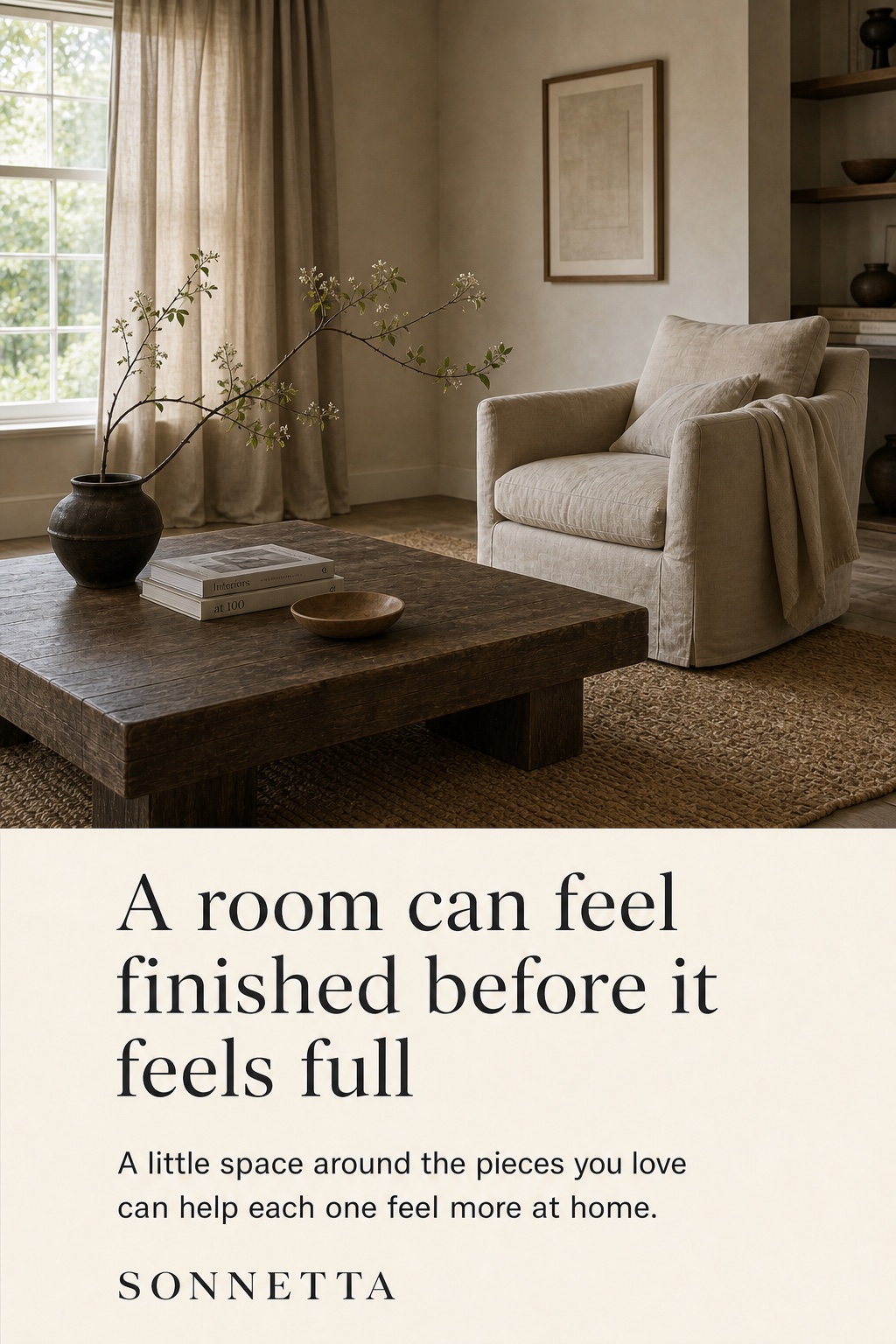
Room notes
A room can be beautifully furnished and still feel slightly closed.
Nothing is obviously wrong. The chair is good, the table is useful, and the colors agree. Yet movement between them feels constrained because each object occupies a little too much of the circulation path.
The instinct is often to add something. But a room can need subtraction before it needs character. Breath, warmth, and air are not finishing touches. They are part of the architecture of comfort.
Begin with the path through the room.
Notice how the body moves from the doorway to the window, from the chair to the table, and from one room into the next. A clear path should not feel like leftover space. It should feel deliberate.
Pulling a chair a few inches from a wall can give it more presence. Leaving the end of a table open can make the room feel less formal. The useful question is not simply whether everything fits, but whether the room lets you arrive.
Warmth is not the same as fullness.
Warmth comes from surface and age: visible timber grain, linen that softens in use, plaster that catches light unevenly, and stone that is cool without feeling severe.
One wooden table can warm a pale room more convincingly than many small brown objects. This is restraint with substance: fewer things capable of carrying the room.
Let daylight remain legible.
Natural light is easiest to appreciate when it is allowed to change. Choose fabric that filters rather than blocks, keep tall furniture away from the brightest opening, and place a chair where light falls beside the sitter.
The aim is not maximum brightness. It is a room in conversation with the hour.
Give the strongest surface room to work.
A long table, aged cabinet, or beautifully proportioned chair already contributes line, color, and texture. Keep the objects that support an actual ritual and leave part of the surface open.
A quieter way to finish.
When a room feels almost right, wait before buying. Open the window. Clear one path. Remove one object from the busiest surface. Sit in the chair at two different times of day.
The room may not need a new layer. It may need enough air for its best pieces and the life around them to become visible.