Sonnetta Library
Good materials improve with use.
The rooms that age well usually rely on materials that can handle daily life. They soften, fade, mark, and can often be repaired rather than replaced.
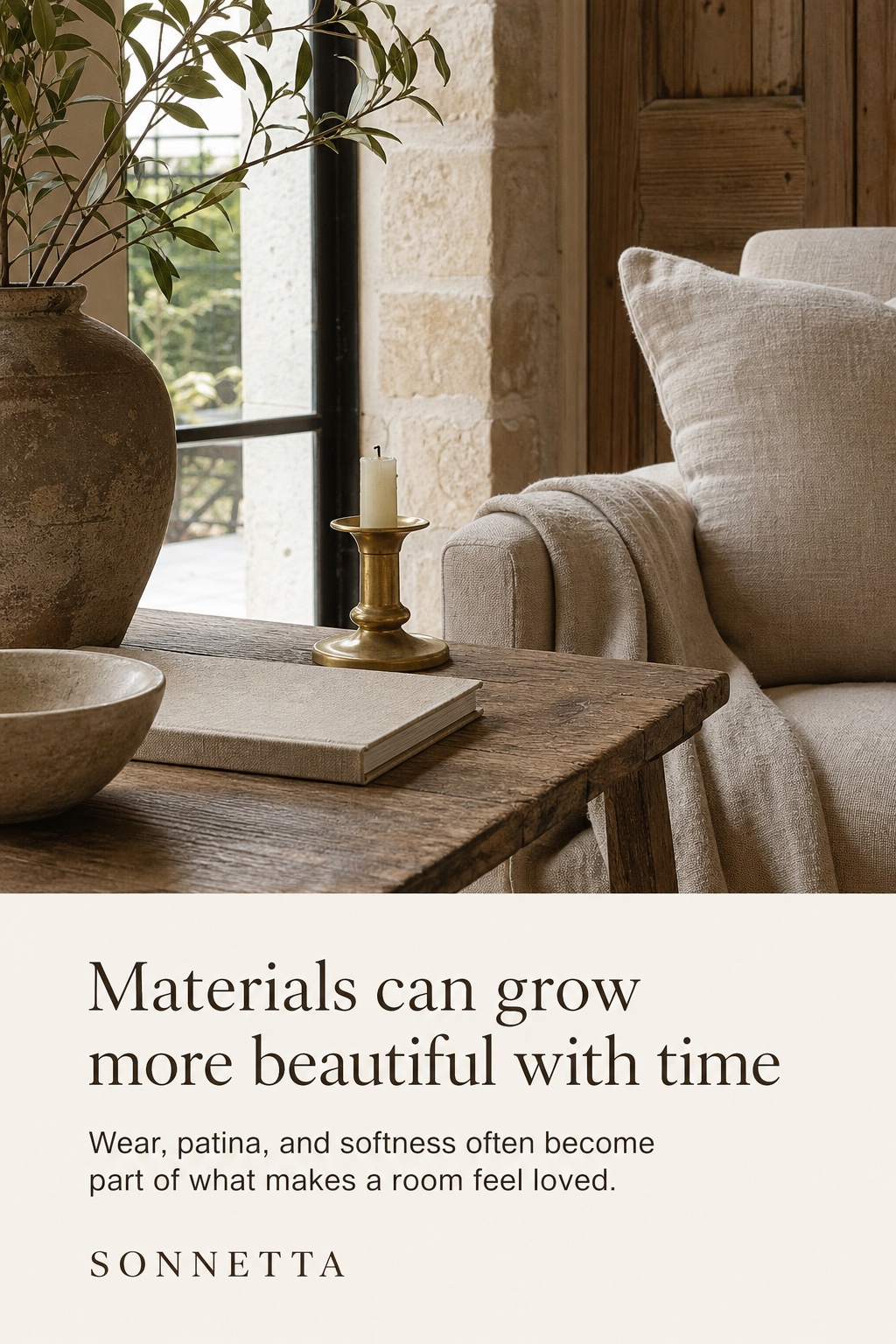
Walnut and burl grow richer with time.
Walnut and burl add depth without making a room feel dark. Both tend to look better as their color deepens and the finish picks up small signs of use.
Wool softens sound.
A wool rug softens sound, feels good underfoot, and helps furniture sit together. In a pale room, its texture may be all the added interest you need.
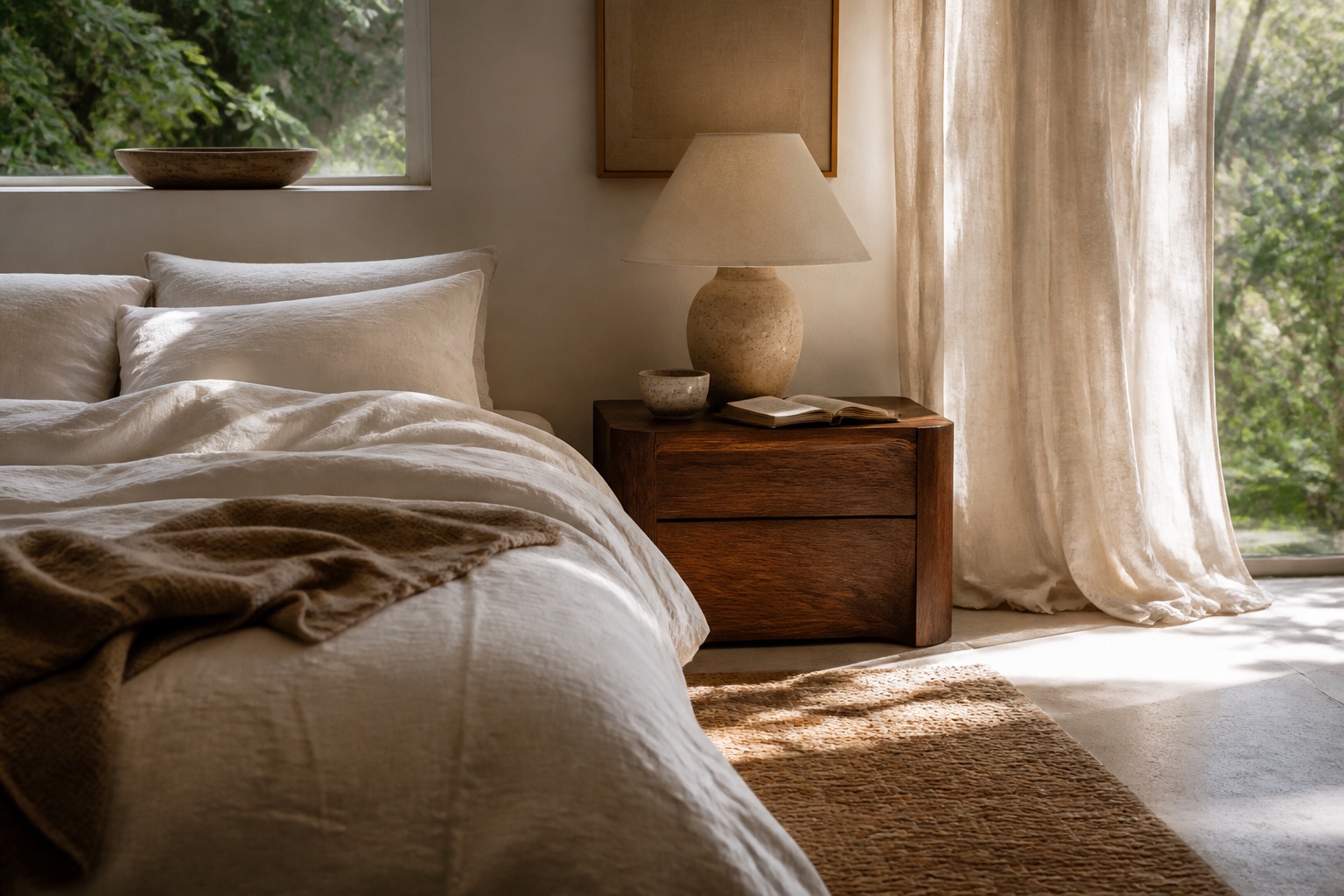
Linen is meant to wrinkle.
Linen wrinkles, and that is part of its appeal. It keeps bedding, tablecloths, and curtains relaxed without looking careless.
Stone changes as it is used.
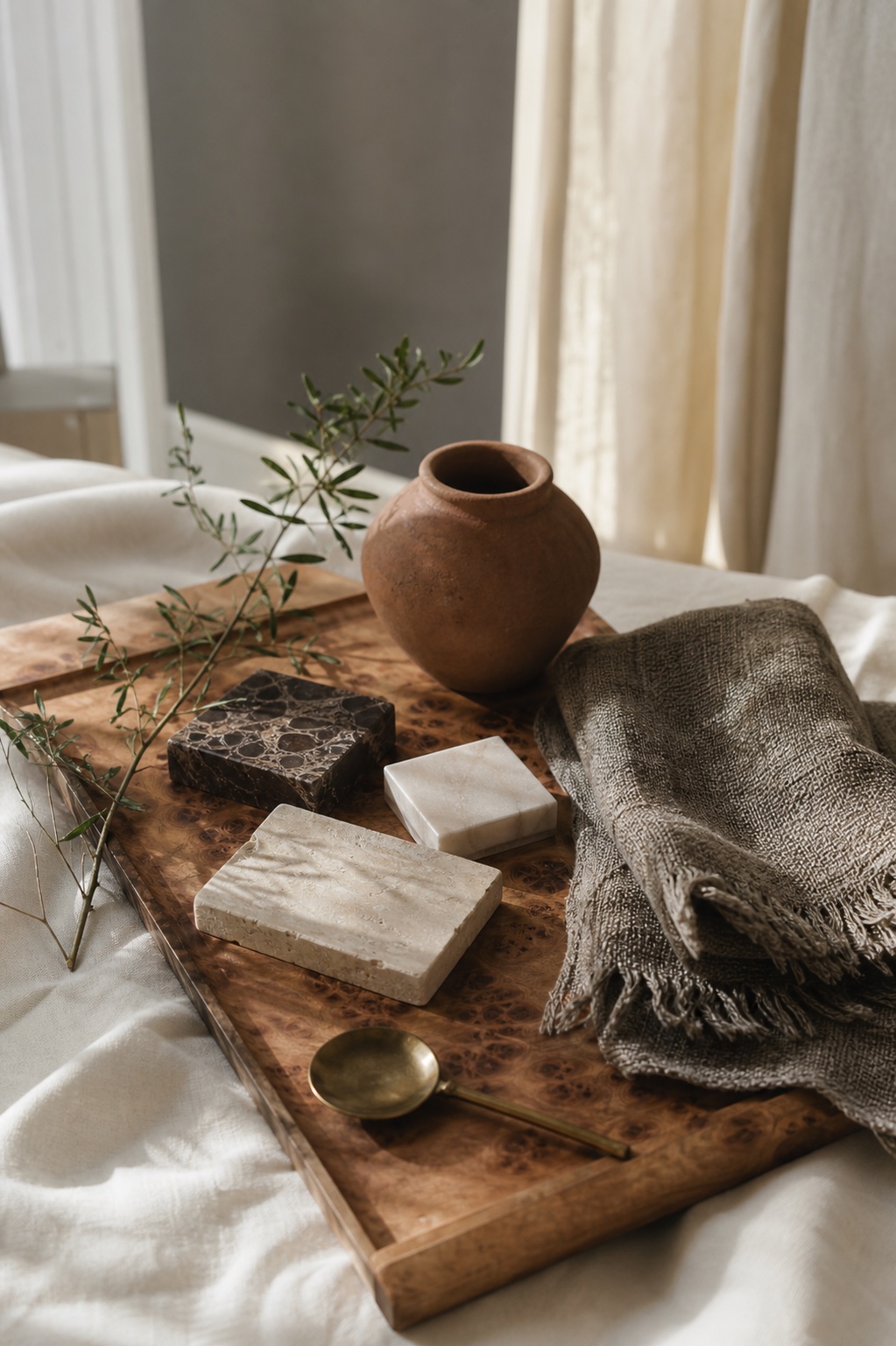
Stone doesn't need to be a statement. A marble table, limestone lamp, or travertine tray adds weight and contrast beside softer materials.
Terracotta warms a pale room.
Terracotta is an easy way to warm a pale room without adding a new color scheme. Small variations in the surface are part of what makes it appealing.
Unlacquered brass changes with touch.
Unlacquered brass and aged bronze work especially well in small doses: a lamp, pull, mirror edge, or candleholder. They darken where they are touched, which is part of the point.
One useful question
Before choosing a material, consider how it will look after five years of sunlight, cleaning, spills, and touch. If you like that version too, it is probably a good fit.
Materials also change what a room sounds like. Continue with objects whose sound changes the room.