The later life
Convertible should describe a complete system, not an optimistic adjective
A crib that becomes a toddler bed can postpone one purchase. A cot whose leftover frames become a proper table can change category entirely. Both ideas are appealing, but only if the later parts fit, remain available, meet the relevant standard, and produce a piece the family still wants to use.
The useful question is not simply, ‘Does it convert?’ Ask what you will own afterward, and what must be stored, bought, assembled, and verified to get there.
Four conversions with enough evidence to examine
This is a source-checked design edit, not a blanket safety endorsement. Every configuration has its own instructions, hardware, intended age, mattress or load requirements, and applicable standards. Product details and availability can change.
Bloom creative-table conversion kit
Maker: Wood Luck Design
Best for: Turning a former cot component into something genuinely different
After the compatible 70 × 140-centimeter Bloom cot bed becomes a couch, its remaining frames can support a full-sized creative-table top. The maker publishes a 70 × 140-centimeter worktop, EN 71-3-compliant MDF and water-based varnish, and flat-pack assembly.
Before buying: The listed product is a conversion kit, not a standalone table. It only makes sense for a family that already owns the compatible Bloom cot bed and has retained the correct frames and hardware.
Classic baby-junior bed
Maker: Leander
Best for: The longest documented sequence within one sculptural bed
Leander’s molded-beech bed moves through five settings, from an enclosed baby cot to an open 150-centimeter junior bed. The junior extension is included, and the maker publishes intended use from birth to approximately age seven, a 100-kilogram carrying capacity, EN 716-1 and EN 71-3 approvals, and a three-year warranty.
Before buying: The mattress is not included. Extending the original oval mattress requires a separate compatible mattress section, and every reconfiguration must follow the current assembly instructions exactly.
Wood Mini+ cot bed
Maker: Oliver Furniture
Best for: A compact room and a documented route from cot to junior bed
The solid and molded birch cot is intended for birth to approximately age three. With separately purchased parts, it converts into a junior bed for use to approximately age nine. Oliver Furniture publishes European production, water-based paint, EN 716 testing, a 120-kilogram static bed-base load, and five-year availability of standard conversion kits from the purchase date.
Before buying: The conversion parts are not included in the cot price. Price the intended final configuration at the beginning, record the purchase date, and verify which parts and mattress sizes will be needed later.
Sparrow conversion kit
Maker: Oeuf
Best for: A straightforward US-market crib-to-toddler transition
The kit replaces one panel of the compatible Sparrow Crib and reuses the crib mattress. Oeuf publishes solid birch and Baltic birch plywood, European production, GREENGUARD Gold certification, water-based finishes, and use to approximately age five or six or 45 inches tall. Its current source also names applicable US crib and toddler-bed standards.
Before buying: Compatibility is model-specific, and the maker currently excludes the kit from returns. Confirm the crib model, finish, hardware, instructions, child’s height, and current product or recall information before ordering.
Price the final configuration, not the first box
Conversion kits, mattress extensions, rails, extra slats, new fasteners, delivery, and professional assembly can change the real cost. Before purchasing the first configuration, make a list of every part required for the version you expect to use later. Confirm whether those parts are included, currently sold separately, guaranteed to remain available, or dependent on a model year or finish.
Keep the instructions and the parts with the furniture
- Save the model name, SKU, purchase date, receipt, instructions, and hardware diagram.
- Label removed rails, frames, fasteners, and tools; store them dry and together.
- Check whether a new configuration changes the mattress, guardrail, load, wall fixing, or intended age.
- Inspect every reused connection and replace damaged or missing hardware only with maker-approved parts.
- Check current instructions and recall information before rebuilding furniture years later.
Our strongest idea is the one that changes category
The Bloom table is the most conceptually interesting because it gives former cot frames a credible second job. Leander offers the clearest included multi-stage bed sequence. Oliver Furniture makes future kit availability unusually visible. Oeuf provides the most straightforward documented US-market crib-to-toddler route. They solve different problems; none should be called ‘forever furniture’ without understanding the actual second configuration.
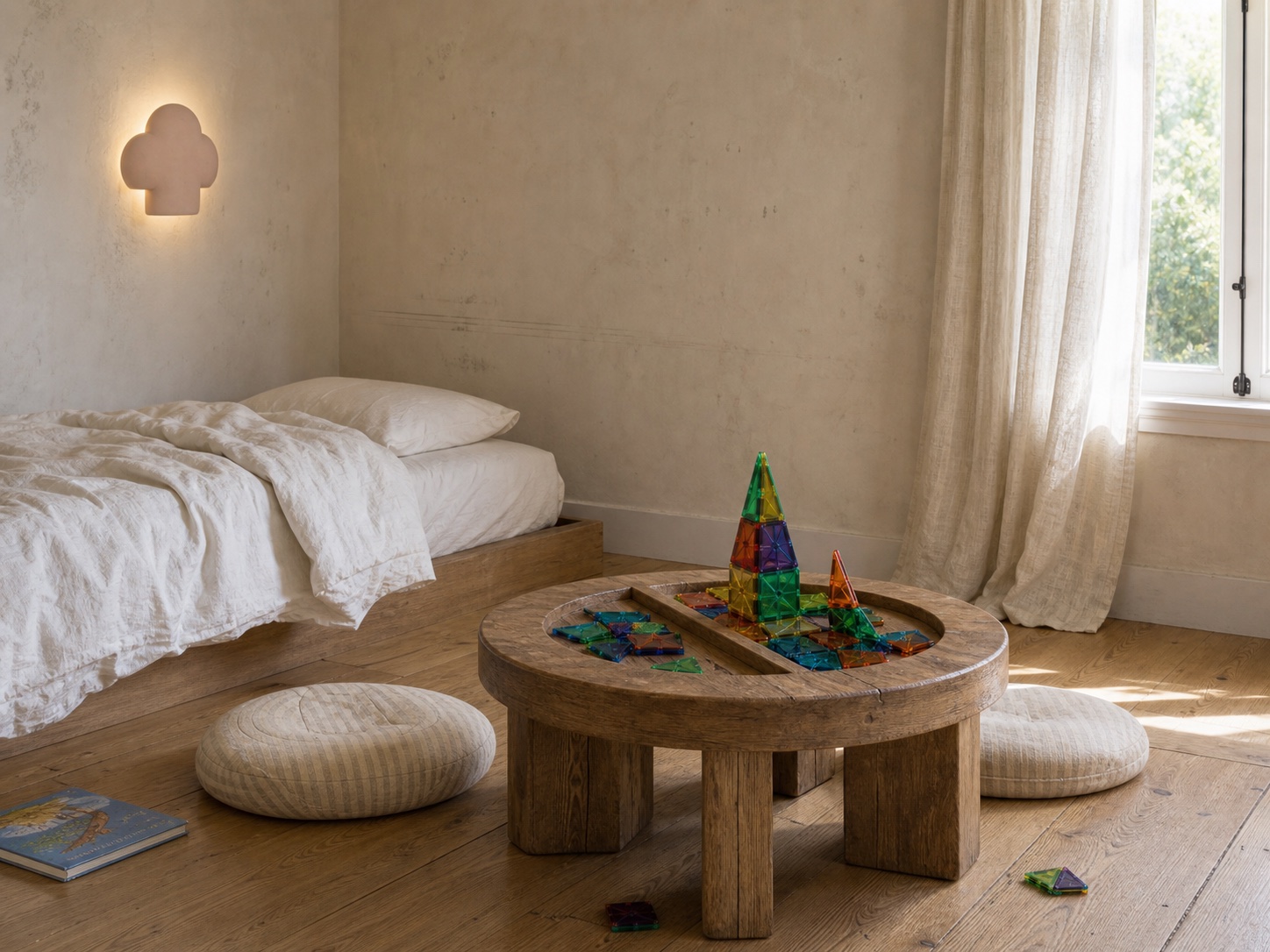
The links in this article are ordinary source links and are not affiliate links. Sonnetta received no compensation for these selections. No linked product is shown in the conceptual editorial image. This is general editorial guidance, not product-safety certification; verify the current source, instructions, standards, recalls, compatibility, and actual condition before use.
Continue with beautiful playroom storage, whimsical furniture that is actually well made, children’s storage chests that can become keepsakes, or explore Children’s Rooms Worth Keeping.