Start with the life of the space
An outdoor room is not an indoor room with weatherproof furniture.
The best terraces, patios, and garden corners receive the same attention as the rooms inside, but they answer different conditions. Sun moves. Rain collects. Cushions need somewhere to dry. A chair that feels generous for an hour may be awkward for dinner, and a table that photographs beautifully may stain the first time sunscreen, wine, or wet leaves remain on it.
Begin with what will happen there and how often: morning coffee, long reading, family meals, children moving through, wet swimsuits, year-round rain, or a few calm evenings each season. The furniture should make that use easier before it makes the photograph complete.
Measure the body, the furniture, and the opening paths.
Seat height and depth tell more than a style label. A low, deep chair supports lounging; it may be difficult for a shorter guest or someone who needs a more upright rise. A coffee table should sit within reach without blocking knees or the route around the seating. Mark every piece at full scale, then include doors, covers, footstools, reclining positions, and the space required to lift and carry cushions away.
- Compare seat height, usable depth, arm height, back support, and the position of the body, not only overall dimensions.
- Leave a clear route through the room when chairs are occupied and footstools are in use.
- Check whether a table can be reached without leaning and whether its edge conflicts with knees.
- Plan where cushions, covers, serving pieces, and wet textiles will go when the weather changes.
Material names are only the beginning.
Teak, acacia, terracotta, powder-coated metal, rope, and synthetic weave all age differently. Solid teak does not establish grade or responsible sourcing. Acacia can be an excellent outdoor wood, but its finish and care schedule matter. Terracotta can become more beautiful as it changes while remaining vulnerable to stains, impact, and unverified freeze-thaw conditions. A synthetic weave may be more practical outdoors than natural fiber, but it should be named honestly.
Ask for the exact material, finish, hardware, care instructions, warranty, replacement parts, and limits on full exposure. 'Weather resistant' is not the same as waterproof, maintenance-free, salt-safe, freeze-proof in every climate, or suitable for remaining uncovered all year.
Four current pieces that clarify the questions
These candidates stayed in our research because each contributes a distinct answer: accessible lounge seating, an honest teak surface, a material-led garden table, and a chair with enough form to establish a room. Sonnetta has not personally tested them, and the conceptual hero image does not depict any of them.
Carmel natural acacia outdoor lounge chairs
Maker: Living Spaces
Best for: A terrace or covered patio that needs two generous lounge seats without the visual weight of a sectional
The two-piece set uses exposed acacia frames and greyish-white, solution-dyed polyester cushions. Living Spaces publishes removable, reversible, machine-washable covers, a 15-inch seat height, and a deep 26.6-inch seat. The broad timber rails make the chairs read more like calm indoor lounge furniture than conventional patio club chairs.
Before buying: The proportions are for lounging, not upright dining or conversation. Acacia is not maintenance-free teak. Confirm the exact finish, re-oiling schedule, rain and winter guidance, cushion dry time, replacement-cover availability, hardware, warranty, and whether the intended exposure suits the maker's care requirements.
Del Mar solid-teak outdoor coffee table
Maker: Living Spaces
Best for: A longer seating group that needs an honest wood surface with softer circulation than a rectangular table
The 55.1-by-27.6-inch oval table is listed as solid teak with an oiled finish. Its substantial crossed leg frames give the surface presence without adding decorative detail, and the 16.5-inch height belongs naturally with low outdoor lounge seating.
Before buying: Solid teak is meaningful, but the current record does not establish teak species, grade, forest or country of origin, chain-of-custody certification, exact oil system, re-oiling schedule, tabletop load, replacement parts, or long-term weathering. Teak can silver outdoors; that expected surface change should not be confused with maintenance-free construction.
Albi terracotta outdoor coffee table
Maker: InternoItaliano
Best for: A garden room where material character and gradual patina matter more than a perfectly sealed surface
Designed by Mario Scairato and made in Italy from Italian terracotta, Albi is closer to garden architecture than ordinary patio furniture. The maker identifies a 53-centimetre tabletop, 60.5-centimetre lower diameter, and 28-centimetre height, and expressly describes the table as weather-resistant and guaranteed for below-zero use.
Before buying: The accessible record does not publish a minimum guaranteed temperature, freeze-thaw test, stain treatment, load rating, exact weight, or Albi-specific care and repair instructions. Natural terracotta can mark, absorb liquids, chip, and develop a patina. Those behaviors are part of the purchase decision, not defects to discover later.
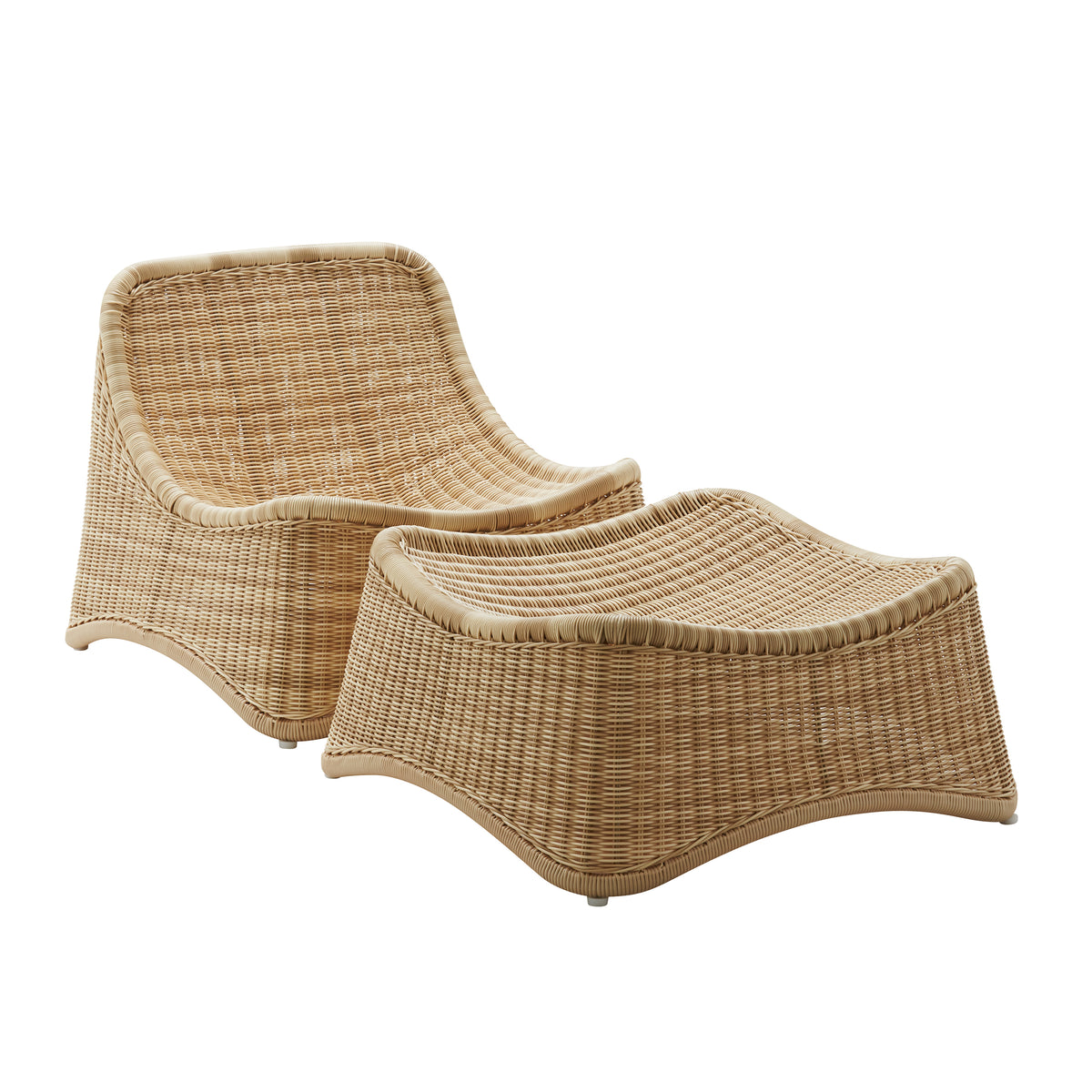
Chill outdoor lounge chair with footstool
Maker: Sika Design
Best for: A garden edge or terrace where one memorable chair can establish the entire place to sit
The reclined woven frame and separate footstool create a clear use rather than filling the patio with a matching suite. Its aluminum and polyethylene Alu-Rattan construction is materially different from natural rattan, but it preserves visual lightness outdoors and gives the empty chair real presence.
Before buying: The source we track is currently unavailable, so this remains a design reference rather than an active commerce recommendation. Verify the current manufacturer specification, dimensions, finish, outdoor-care limits, warranty, stock, and retailer terms before purchase.
The indoor feeling should come from presence, not fragility.
Outdoor furniture can share the proportion, tactility, and calm of indoor furniture without concealing weak outdoor performance. A deep chair may feel like a living-room chair; its fabric should still release water and its frame should still have a credible care plan. A wood table may feel like furniture rather than equipment; its finish should still be understood before it is left in full sun and rain.
This is also why the room rarely needs a complete suite. One convincing chair, a reachable table, useful shade, and somewhere for the necessary things can be enough. Add pieces in response to how the space is actually used.
The outdoor-furniture check before purchase
- Record sun, rain, wind, salt, pool chemicals, freeze-thaw exposure, drainage, and seasonal storage.
- Verify dimensions in use, not only closed product dimensions.
- Read the exact material and finish specification; separate solid wood, veneer, composite, natural fiber, and synthetic weave.
- Obtain cleaning, drying, covering, re-oiling, winter, and stain guidance from the maker.
- Check cushion construction, removable covers, dry time, replacement availability, and where cushions will be stored.
- Confirm hardware, load ratings, levelling, assembly, warranty, replacement parts, current stock, and delivery access.
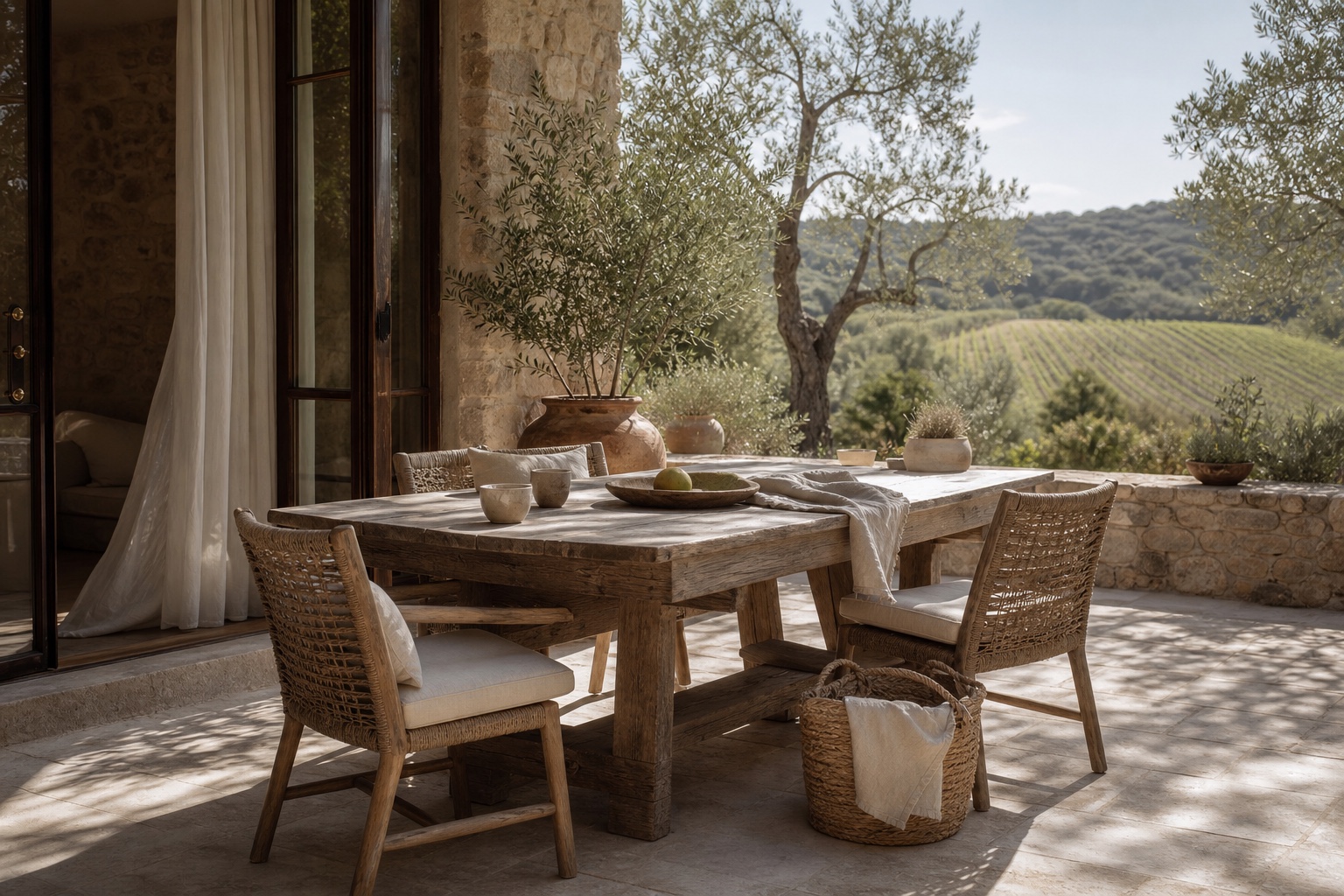
The external links in this article are ordinary source links and are not affiliate links. Sonnetta received no compensation for these selections and has not personally tested them. No named product is shown in Sonnetta’s conceptual editorial image. Prices, availability, finishes, specifications, warranties, and retailer terms can change; verify the exact current product before purchasing.
Continue with outdoor cushion storage that looks like furniture, materials that age well, or the Functional Sculpture collection.
Weather can become part of the room too. Read how to choose a wind chime by tuning, activity and distance.