Room notes
Sometimes a room has plenty and still feels unfinished.
The sofa works. The rug is fine. The light is good. Still, one corner feels unfinished, so a small table appears, then a lamp, a bowl, another cushion. None of it is wrong, but the corner is no more useful than it was before.
That is usually the point when we add more. It can help to stop first. The problem may not be an empty spot; it may be that too many small pieces are trying to solve it.
Editing often helps more than shopping.
Editing doesn't mean making a home severe. It can be as simple as moving the chair no one uses or clearing the objects added only because a shelf looked bare. Once the extras are out of the way, the useful pieces are easier to see, and so is the gap you actually need to fill.
Sometimes the answer is one well-chosen piece, not several smaller ones.
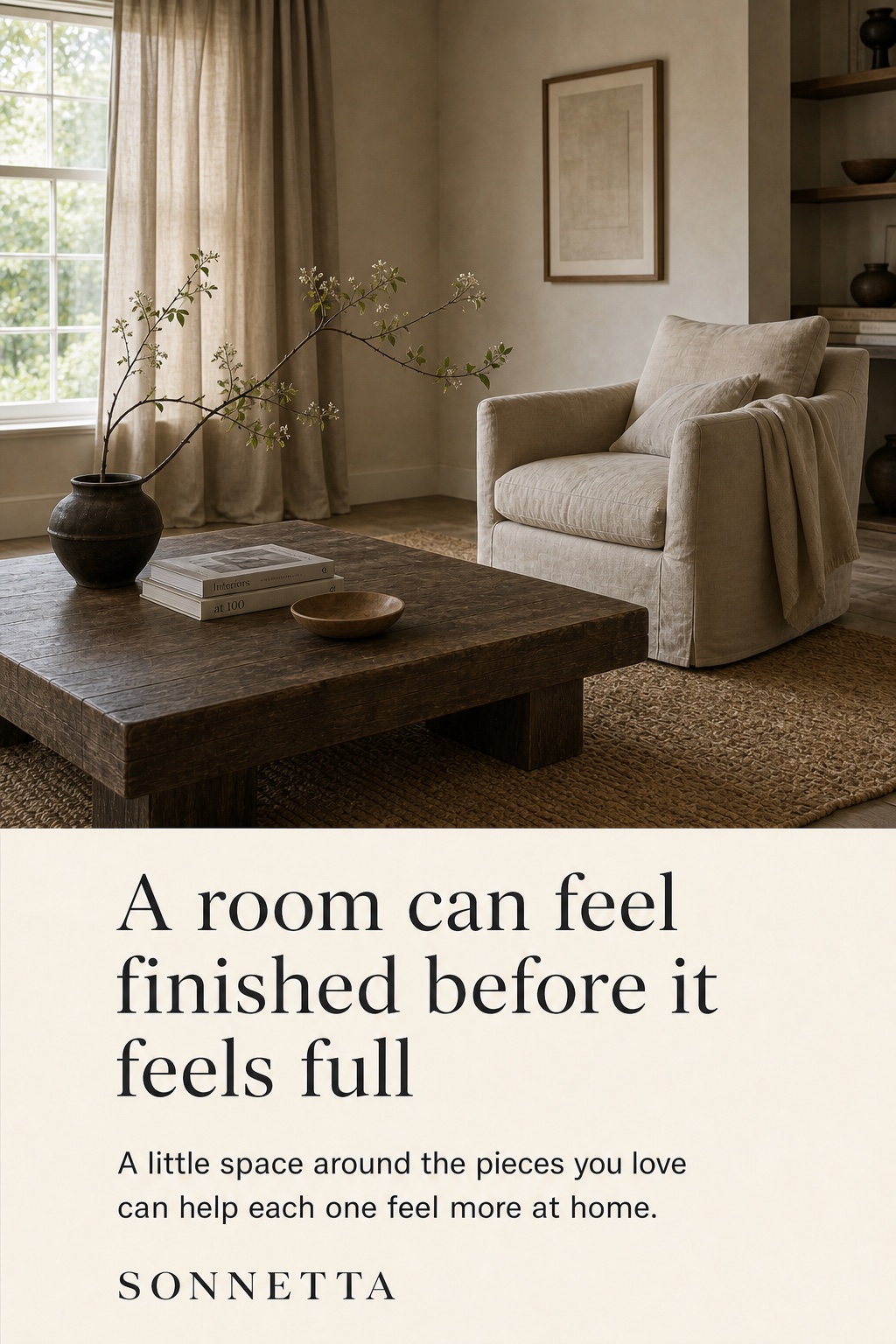
A good piece often makes the rest of the room look more intentional without drawing all the attention. The rug, lamp, and window begin to feel connected instead of separate.
What we mean by functional sculpture.
The phrase can sound more serious than it is. We mean a useful object with a shape or material you still enjoy after the styling is gone: a chair, table, lamp, or vessel that works hard and looks good doing it.
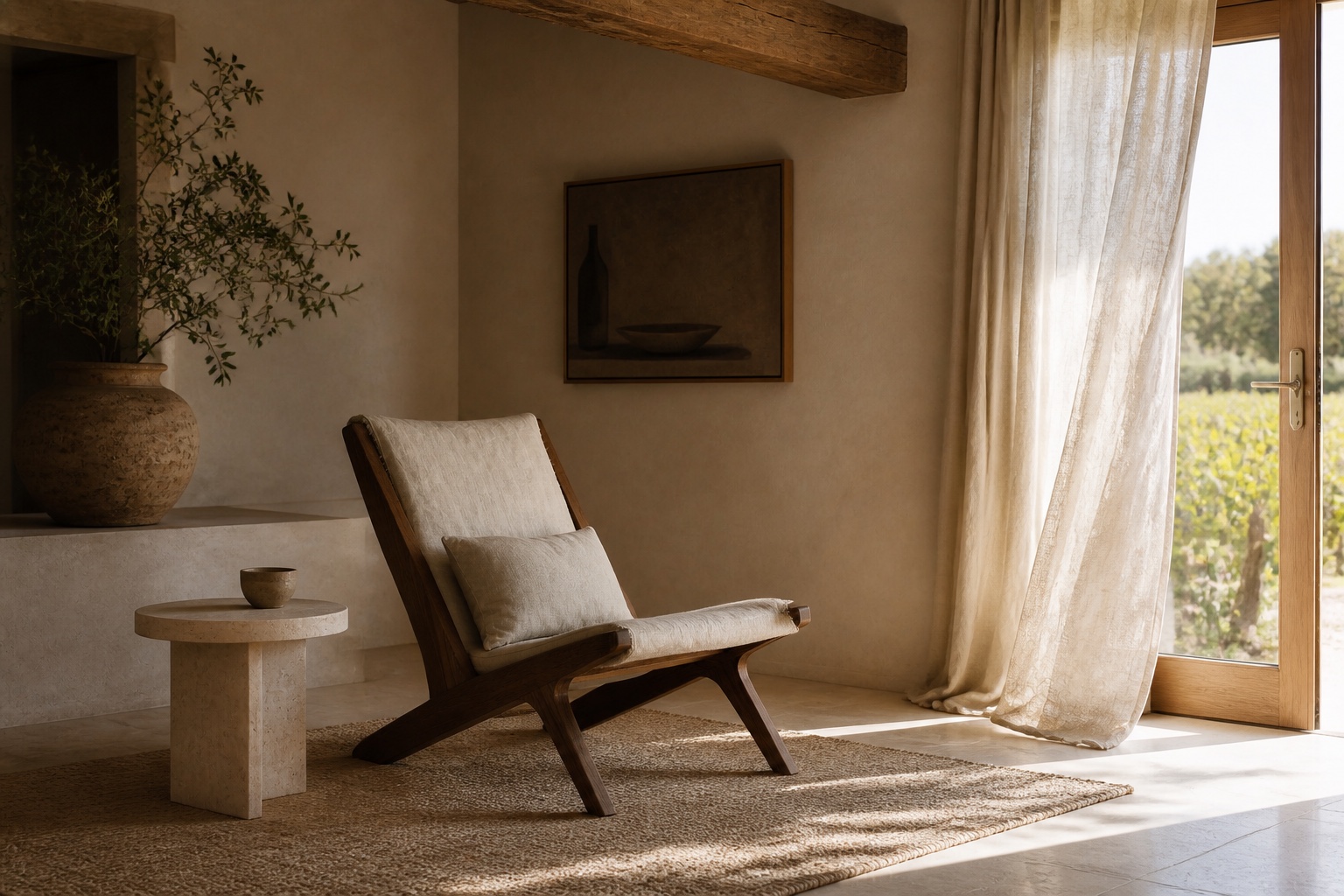
A chair can make an unused corner useful.
Think of the chair people choose first. It is comfortable, sits well near the window, and is easy to pull closer when someone visits. By changing how the corner is used, it does more than simply fill the space.
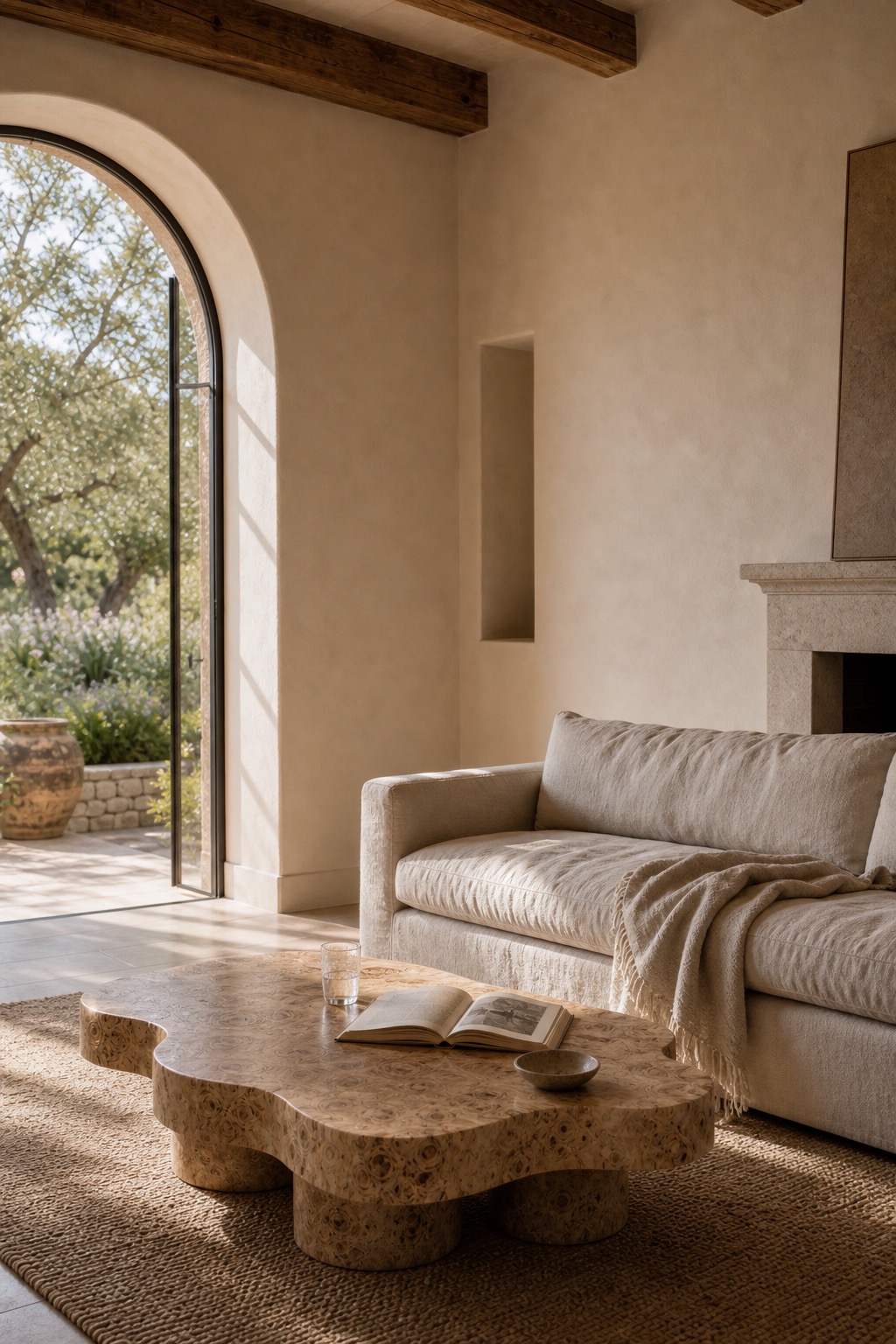
The right table connects the seating.
A coffee table that is too small leaves chairs and sofas feeling disconnected; one that is too busy adds clutter. A useful size is one everyone can reach, with enough open surface for a book, a cup, or a small dish.
Lighting changes how the room feels at night.
A pendant hung at the right height brings light to the table rather than the ceiling. A shade cuts glare, and warm metal softens as the light drops. The meal can be simple and the room will still feel inviting.
A good vase works empty, too.
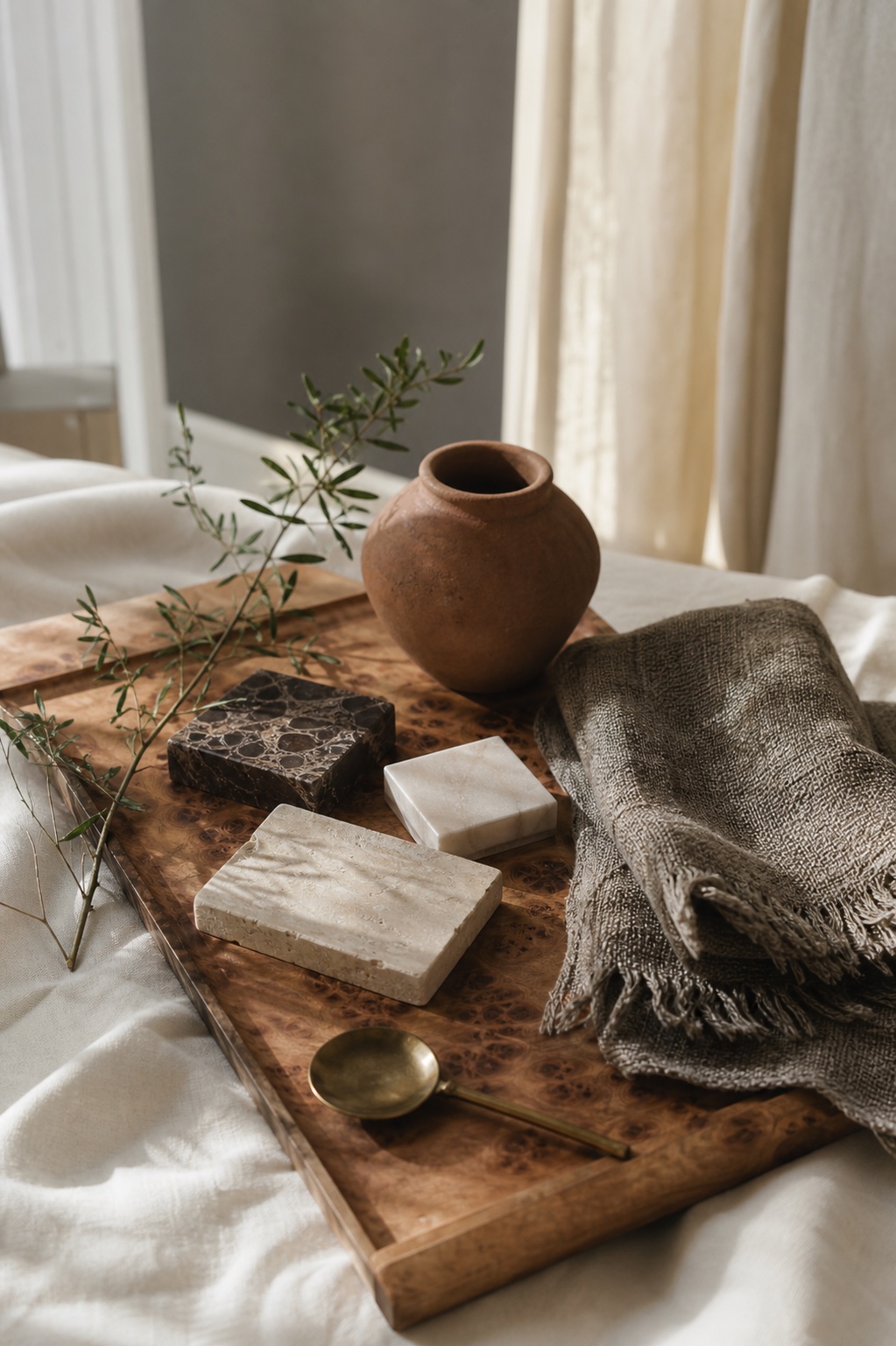
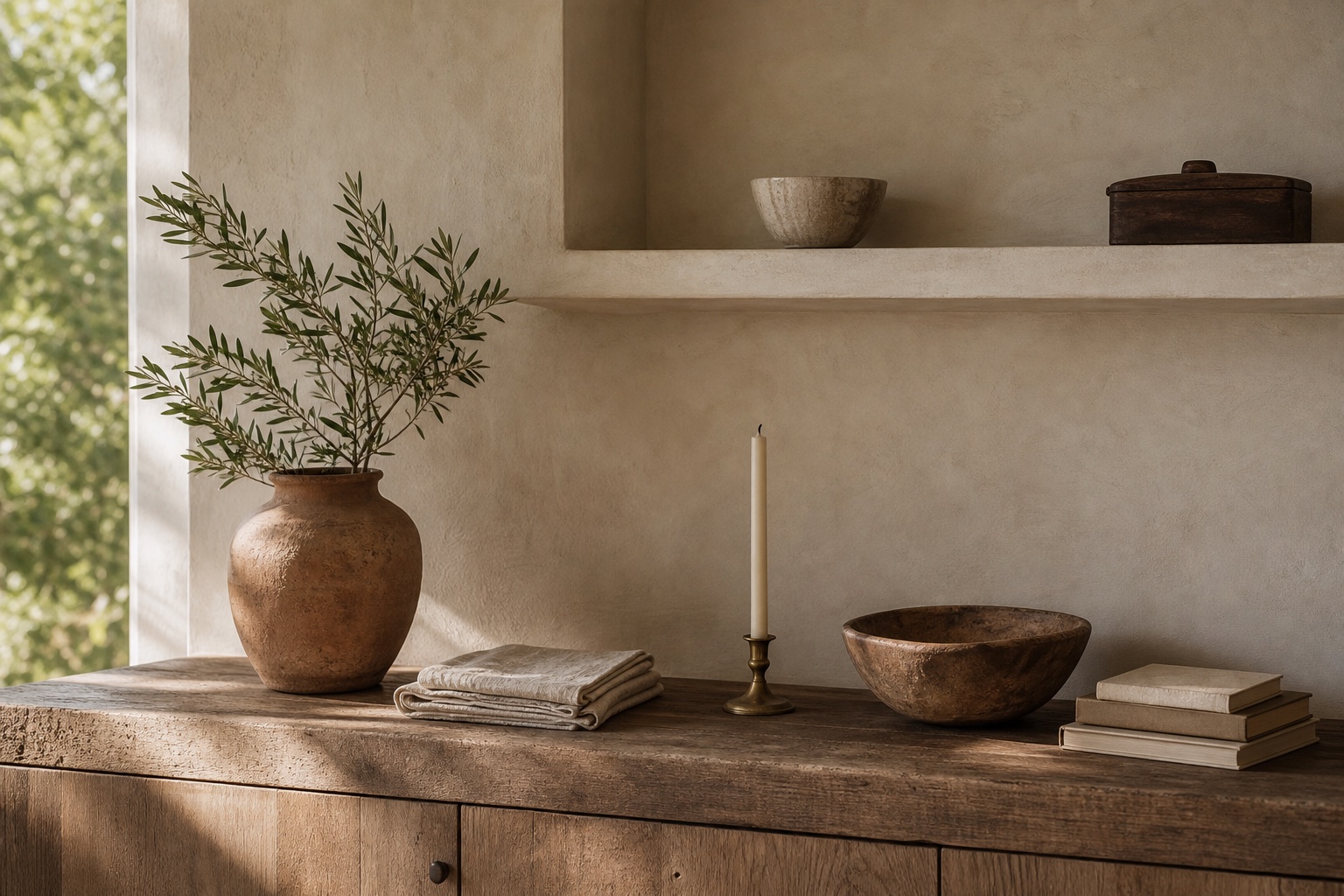
A heavy clay vase can make a few garden branches feel finished, but it should still be pleasing without them. Shape, weight, texture, and the marks of making are enough.
Pieces like these do not need much arranged around them. A shelf can hold less, a wall can stay clear, and the room can still feel complete. Leave a little space and see how it feels for a few days. You may find that the room needs one good piece, or nothing else at all.
A room may need only one deliberate sound. Continue with how to choose it by listening and frequency.