Reflection as a building material
Begin with what the mirror will contain
A beautiful mirror is not only an object. It is an edited view. Before choosing its shape or frame, stand where the mirror might go and look in the direction it would face. The garden, a painted ceiling, a long corridor, candlelight, or one sculptural branch may deserve to be doubled. A television, a busy doorway, or the back of a storage wall may not.
The strongest placement feels less like decoration and more like authorship. It decides which part of the house will appear twice.
A mirror can invent an opening
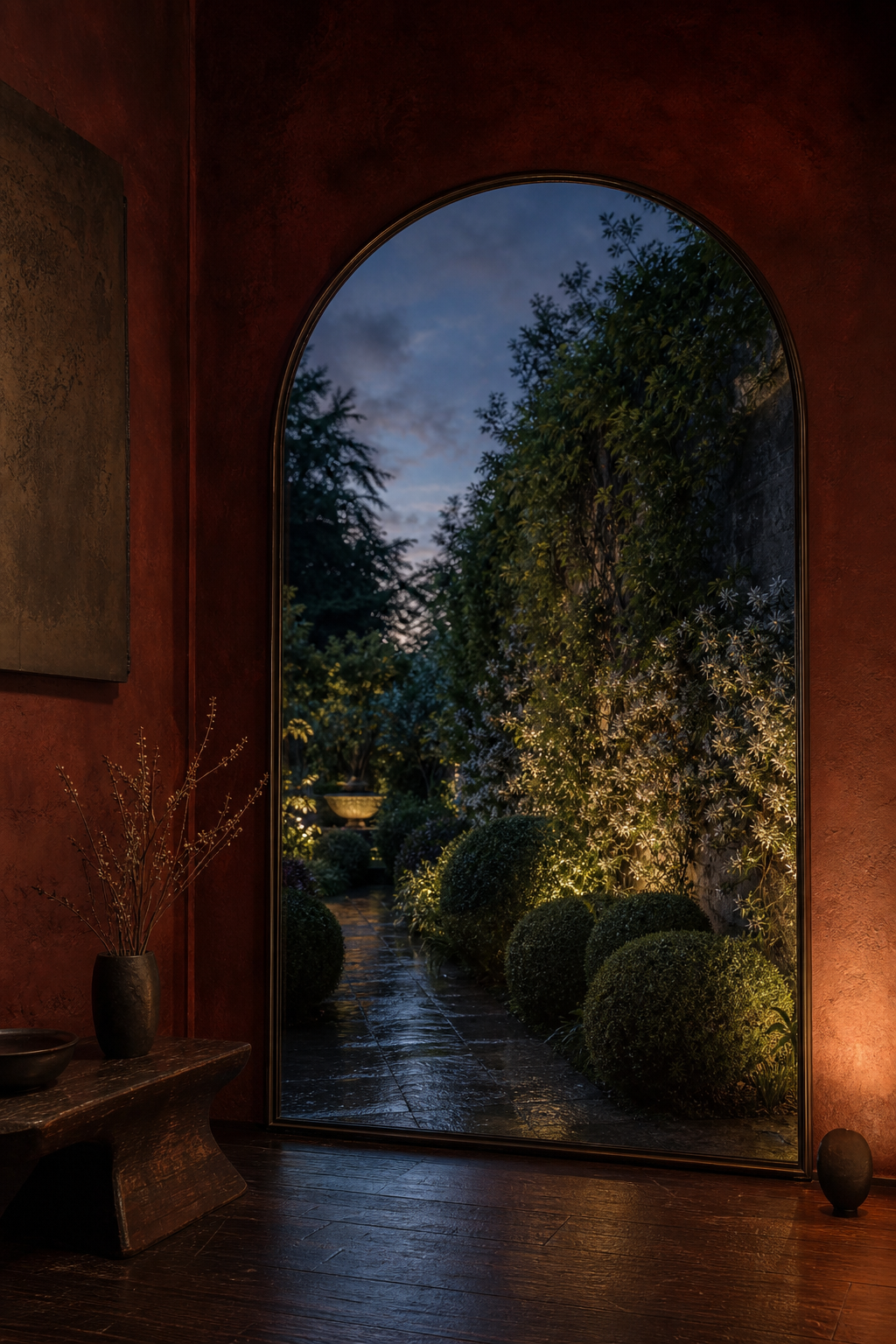
A tall arched mirror can answer a real doorway across the room, continue the rhythm of a colonnade, or establish an axis where the architecture lacks one. The effect is most convincing when the shape, base line, and surrounding reveal behave like part of the wall rather than a framed accessory hung at eye level.
Conviction matters more than ornament. A narrow border, a deep plaster return, or panels aligned to the room can make the installation feel inevitable. An undersized mirror with a decorative frame usually reads as an object placed after the architecture was finished.
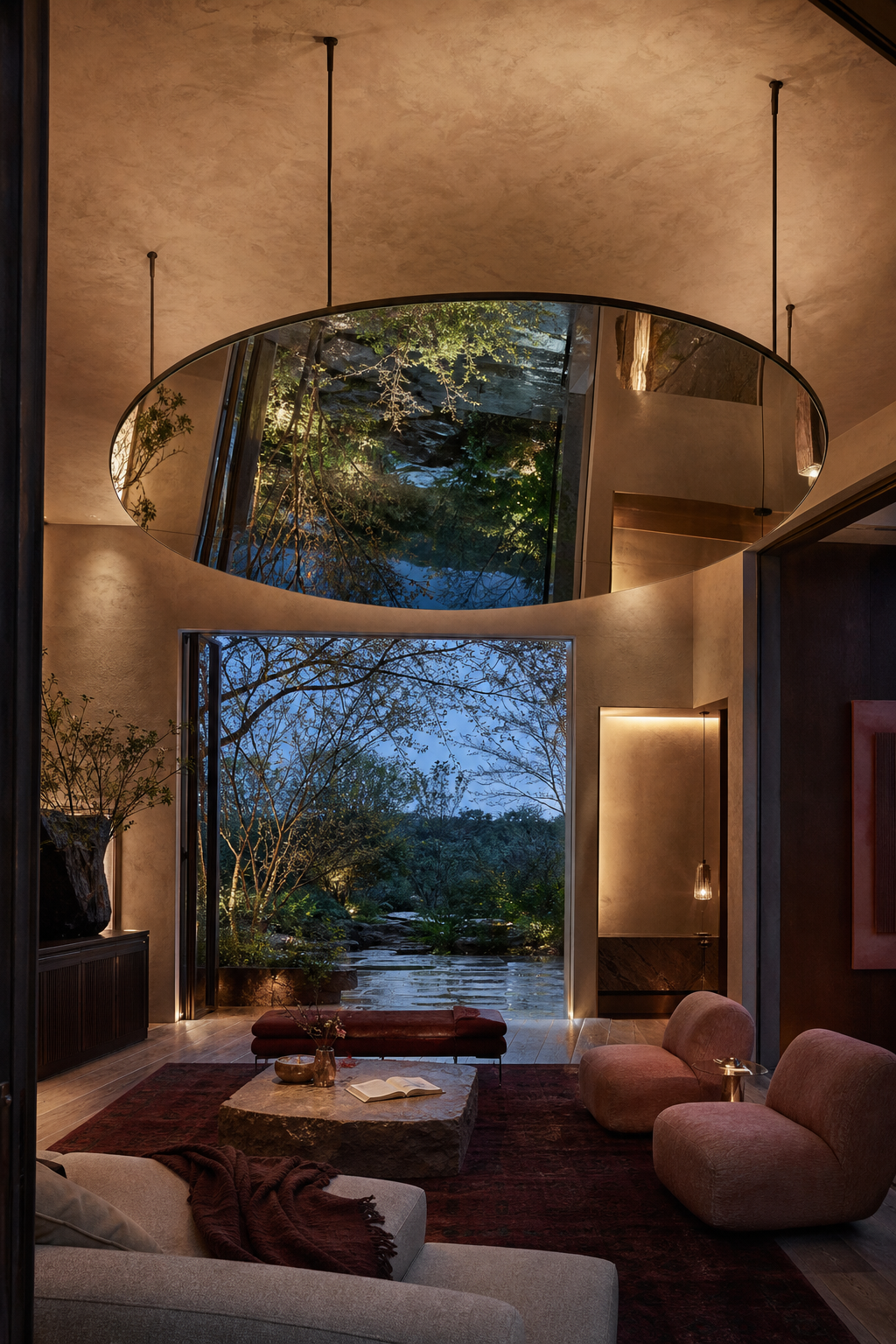
The ceiling can hold a second sky
Suspending a mirror below a high ceiling changes the expected direction of reflection. Garden and weather appear overhead. The room gains movement without another pattern or color. This is the most theatrical idea in the series, and therefore the one that depends most on restraint everywhere else.
A large suspended mirror is a specialist installation. Its weight, glass specification, frame, suspension, seismic conditions, overhead clearance, secondary restraint, and supporting structure require qualified design and installation. A conceptual image cannot resolve any of those questions.
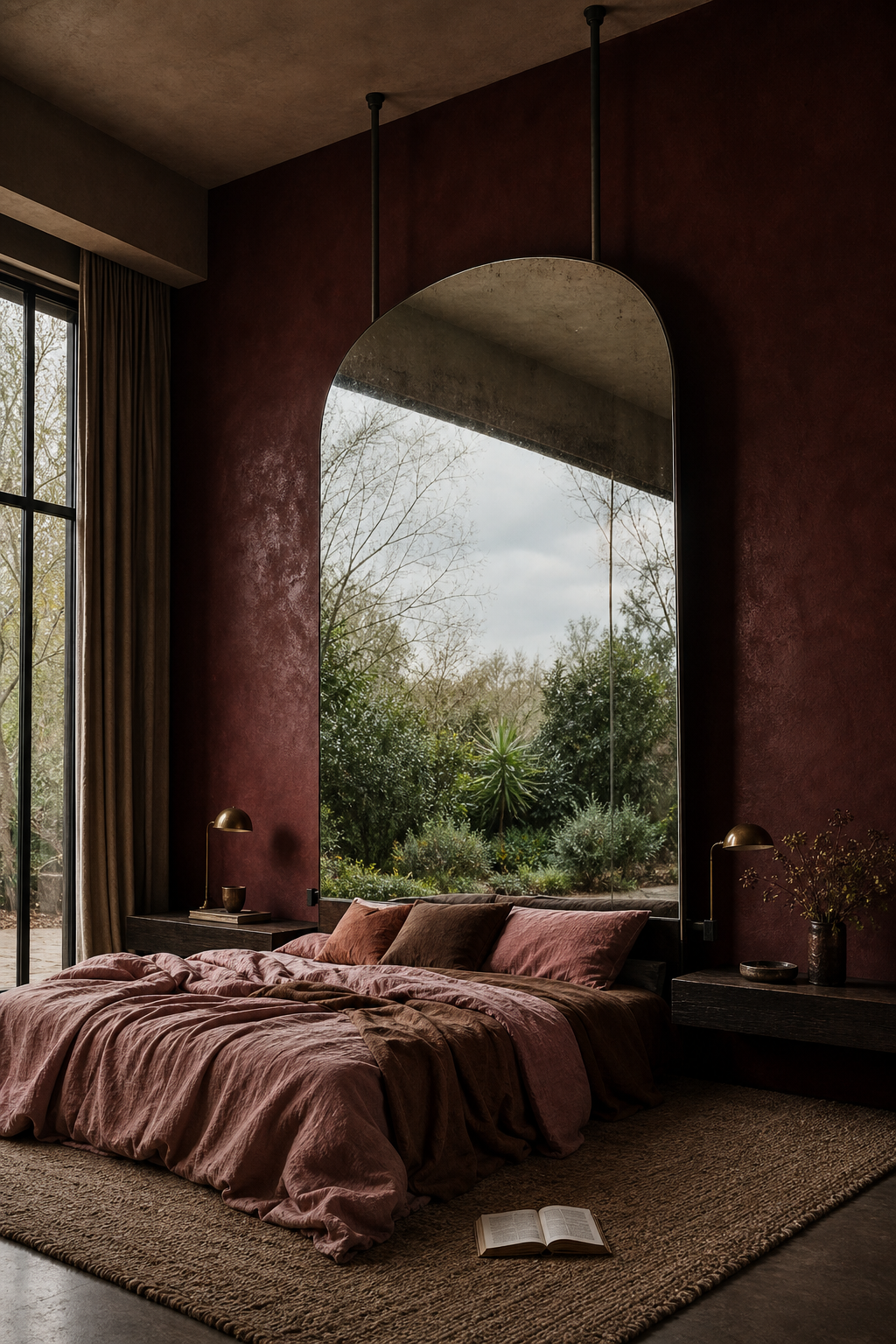
A headboard can borrow the garden
Behind a bed, a monumental mirror can feel calmer than a collection of art because it offers one continuous view. The useful trick is to angle or position it so the reflection contains landscape and light rather than the bed itself. Leaving a shadow gap between mirror and wall can make the glass feel architectural while revealing the material behind it.
Antiqued glass makes repetition softer
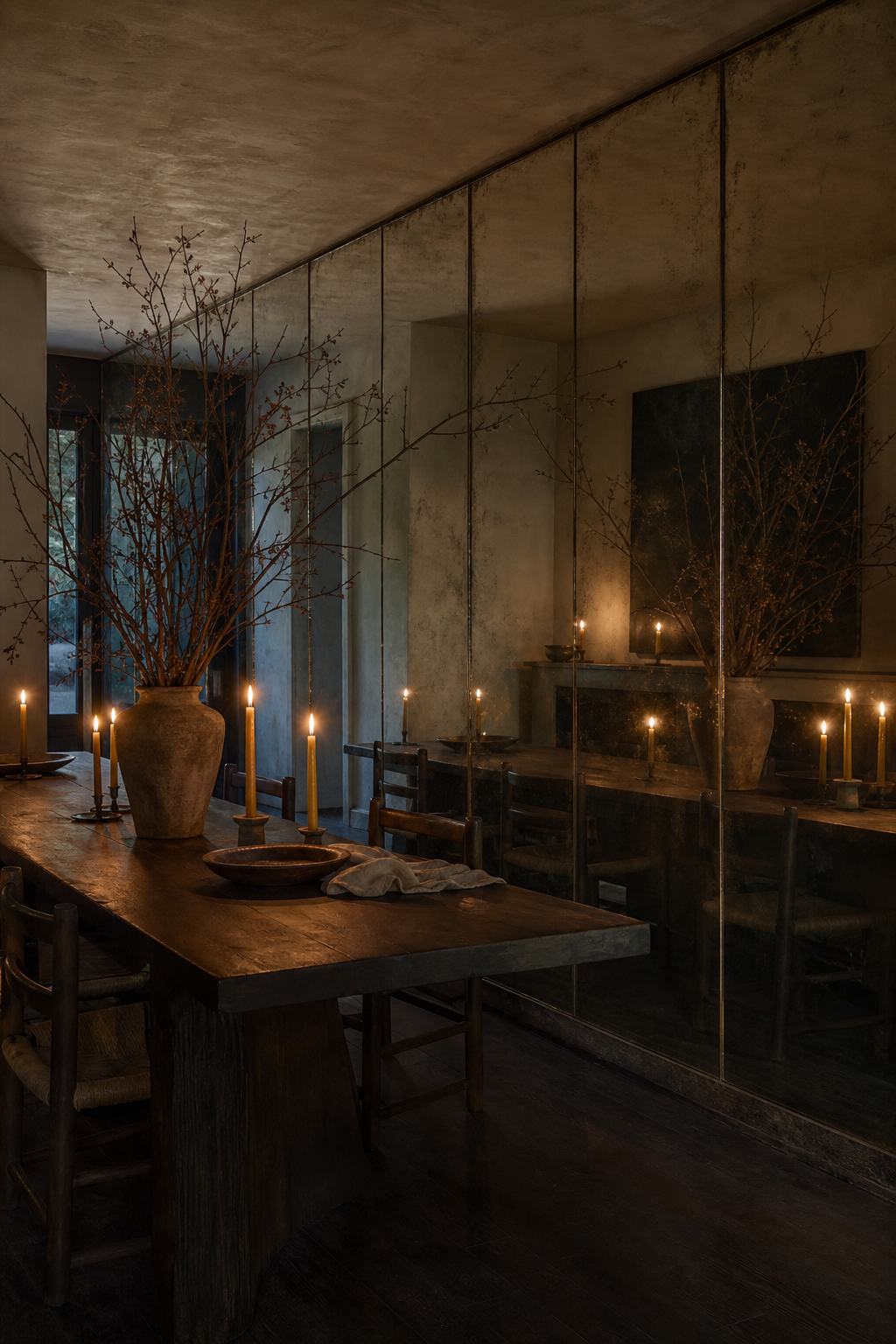
A room-length mirror can become cold when every edge and light source is repeated with perfect clarity. Soft foxing, restrained tonal variation, and visible panel divisions turn the reflection into atmosphere. The room still feels larger, but it does not feel clinically doubled.
Panel seams should follow the architecture. Align them with bays, doors, cabinetry, or a table rather than dividing the wall into arbitrary equal units. The installation then reads as a surface with order, not a collection of mirror tiles.
Kitchen cabinetry can disappear without becoming glossy
Mirror works beautifully in a kitchen when it is treated like an inset cabinet material rather than a decorative backsplash. Smoked or softly antiqued panels in a tall pantry run can borrow the dining room, repeat a pendant, or return a garden view while allowing the cabinetry to recede.
The most convincing version uses one controlled run, quiet frames, and reflection gentle enough to tolerate daily life. Keep it away from the busiest preparation zone, specify edges and backing for the application, and test what the doors reveal when they are both closed and open. Perfectly clear mirror across every cabinet is usually less generous than a smaller, more deliberate intervention.
A closet wall can become a false enfilade
The familiar mirrored sliding door reflects everything indiscriminately and advertises its function. A more architectural closet elevation uses tall inset panels, deep timber or plaster reveals, and a deliberate rhythm of widths. One arched panel among rectangles can suggest a doorway; gentle antiquing can make the wall feel like an old folding screen.
Plan the reflection so the closed doors borrow one composed view rather than returning the whole bedroom. Concealed pulls, robust door hardware, protected edges, and enough clearance for bedding and circulation keep the illusion from becoming fragile. The goal is not to make storage disappear completely. It is to let the storage wall appear to contain another room.
A floating mirror can divide a room without closing it
A monumental double-sided mirror suspended slightly above the floor can establish a dining area, dressing space, or quiet corner while preserving light and movement around it. Set off the room's main axis, it reveals and conceals different views as a person moves through the space.
This is not a portable screen. The panel, frame, overhead structure, lateral restraint, edge protection, clearance, and reflected sight lines all require deliberate professional resolution. A simpler translation is a smaller framed mirror fixed within an open timber screen, where the surrounding structure makes its boundary unmistakable.
More reflection does not always mean more light
A mirror returns what reaches it. In a dark room, that may be depth, shadow, and a second view rather than brightness. This is often more interesting. A mirror that catches a lamp directly can introduce glare, while one placed across from a garden may bring soft movement into the same room all day.
Test the reflection from the important seats, not only from the doorway. Check it in morning light, evening light, and with lamps on. A mirror that looks perfect while standing may become distracting from the sofa or expose a private area from outside.
Floor reflection belongs in the realm of specialists
A narrow reflective floor inlay can appear to carry a window through a room. It is also the least transferable idea here. Walkable glazing, slip resistance, breakage behavior, edge detailing, cleaning, visual perception, accessibility, and structural support must be resolved as one engineered system. Ordinary mirror is not a flooring material.
The feeling can be translated more simply with a dark polished stone band, a shallow reflecting pool outside the glazing, or a metal inlay that catches light without creating a deceptive walking surface.
What to decide before ordering the glass
- Choose the reflected subject before choosing the mirror.
- Check the view from every important seat, doorway, and exterior sight line.
- Decide whether the room needs clarity, gentle antiquing, or deliberately broken reflection.
- Integrate seams, frame depth, reveals, lighting, switches, and nearby doors into the architecture.
- Keep large glass clear of vulnerable circulation and climbing opportunities.
- Use qualified glazing, structural, and installation professionals for oversized, suspended, overhead, or walkable applications.
Editorial and image note. This feature offers design opinion and questions for further investigation, not glazing, structural, installation, accessibility, or building-code advice. The rooms shown are original AI-modified Sonnetta concepts. They do not depict real properties, tested assemblies, purchasable products, or verified compliant installations.
Sources for further reading
- U.S. Consumer Product Safety Commission: Safety Alerts, including tempered glass
- U.S. Consumer Product Safety Commission: mirror and wall décor hanging-hardware recall
- U.S. Consumer Product Safety Commission: Anchor It safety guidance
Continue with how a level change can define a room or why a branch arrangement changes when the empty space changes.